
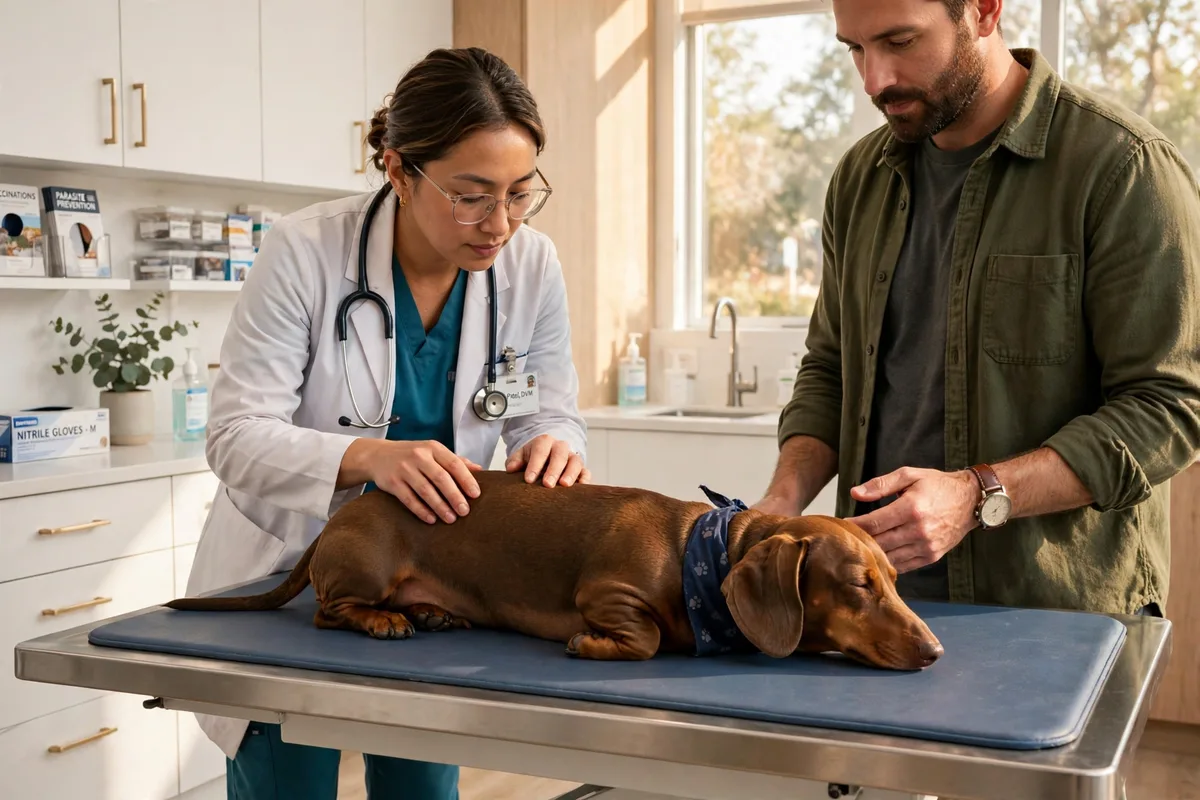
One day your Dachshund jumps off the couch, yelps, and cannot use her back legs. By midnight you are at an emergency vet, hearing two new words — “disc surgery” — and one number you will never forget: five figures. IVDD is the back problem that does this to thousands of dogs every year, and it is the condition owners most often ask us about with one question: does pet insurance actually cover it?
The short answer is yes. Pet insurance that covers IVDD is the norm, and almost every big brand covers it in its accident and illness plan. The honest answer is longer. Some brands make you wait six months before IVDD counts. Some pay for the surgery but not the rehab that follows. And if your dog has already had one episode, no new policy will cover the next one. This guide shows the real rules, brand by brand, with the waiting periods most sites leave out.
Pet insurance and IVDD, in 20 seconds: Yes, most accident and illness plans cover IVDD — surgery, MRI scans, hospital stays — if the first signs appear after you enroll and after the waiting period ends. The catch is the wait: it ranges from 14 days to a full 6 months depending on the brand, because some insurers file IVDD under “orthopedic” conditions. Enroll while your dog is young and has a clean chart, and IVDD is one of the best-covered big bills in pet insurance. Enroll after the first episode, and it is covered nowhere.
Key Takeaways
- Every major brand covers IVDD in its accident and illness plan — but never on an accident-only plan, and never if signs showed before the policy or during the wait.
- The IVDD waiting period is the whole game: 14 days at Spot, Pumpkin, ASPCA and Pets Best; 30 days at Lemonade and Trupanion; a full 6 months (180 days) at Fetch, Embrace and AKC.
- We found no breed exclusions for IVDD in any brand’s current official pages or sample policies. The exclusion that bites is timing, not breed.
- A full surgical course usually costs $5,000 to $12,000 with MRI, surgery and hospital nights added up. Rest-and-medicine care for mild cases runs about $500 to $2,500.
- One episode ends your chances. After a first IVDD diagnosis — or even a vet note about back pain — every new insurer treats IVDD as pre-existing, including future episodes at other discs.
What is IVDD, in plain words?
Your dog’s spine is a stack of small bones. Between each pair sits a soft cushion called a disc. The cushion has a tough outer ring and a jelly-like center, a bit like a jam doughnut. In IVDD (intervertebral disc disease), that cushion wears out early, bulges, or bursts — and pushes on the spinal cord running through the spine. That pressure is what causes the pain, the wobbly walk, and, in bad cases, paralysis.
Vets talk about two types. Hansen Type I is the sudden kind: the jelly center bursts out, often in a young or middle-aged dog, and signs can appear overnight. Hansen Type II is the slow kind: the disc bulges a little more each year, usually in older, larger dogs, and signs creep in over months.
Type I is mostly a disease of short-legged, long-bodied breeds. UC Davis researchers found the reason: a gene (the FGF4 retrogene) that gives these dogs their short legs also makes their discs dry out and harden in the first year or two of life, long before they should. The at-risk breeds include Dachshunds — the most affected breed of all — plus French Bulldogs, Corgis, Beagles, Shih Tzus, Basset Hounds, Pekingese, Cocker Spaniels and Cavalier King Charles Spaniels. A 2025 study of more than 43,000 US dogs found Dachshunds had the highest lifetime rate, and French Bulldogs had 21 times the odds of a mixed-breed dog. Our French Bulldog insurance guide covers that breed’s back risk in more depth.
Vets grade IVDD from 1 to 5. Grade 1 is pain only — your dog cries, shakes, or will not jump. Grade 2 means wobbly walking, but the dog still walks. At grade 3 the dog cannot walk, though the legs still move. Grade 4 is paralysis, but the dog can still feel a firm toe pinch (vets call this “deep pain”). Grade 5 is paralysis with no deep pain — a true emergency, because surgery within about 24 to 48 hours gives the best chance of walking again. Grades 1 and 2 usually start with strict rest and medicine; grades 3 to 5 usually mean surgery, as do cases that keep coming back. When a dog still has deep pain, surgery succeeds about 90% of the time; when deep pain is gone, the odds fall to roughly half.
Does pet insurance cover IVDD? The real answer
Yes — with three rules that decide everything.
Rule 1: you need an accident and illness plan. IVDD is a disease, not an accident, so accident-only plans never pay for it. Pets Best’s own policy notices say it outright: intervertebral disc conditions are not covered under the accident-only policy. Every brand below was checked on its accident and illness plan.
Rule 2: the first signs must come after your waiting period. Insurers count signs, not diagnosis dates. Back pain, a hunched posture, yelping when picked up, dragging toes — if any of that was seen by you or written by a vet before the policy started or during the wait, IVDD is pre-existing and excluded. That is why the length of the wait matters so much for this condition, and why it pays to understand how pet insurance works before you buy.
Rule 3: what is covered is broad — when it is covered. For a covered case, plans generally pay for the specialist exam, the MRI, the surgery itself (usually a hemilaminectomy, where the surgeon removes the disc material pressing on the cord), hospital nights, and medicine. Rehab is the uneven part: some plans include physical therapy, some put it in a higher tier, and Lemonade sells it as an add-on. Since rehab is where recovery is won or lost, check it before you buy — not after surgery.
Which brands cover IVDD? The brand-by-brand table
We read each insurer’s own coverage pages, help centers, state disclosures and sample policies in October 2026 — not roundup sites. Here is what they actually say.
| Brand | IVDD in the base accident & illness plan? | Wait before IVDD is covered | The fine print that matters |
|---|---|---|---|
| Spot | Yes — hereditary and breed-specific cover; IVDD named as eligible on its breed pages | 14 days (same for everything) | No breed restrictions. Signs before enrollment make it pre-existing. Its bilateral rule targets knee and ligament problems, not discs. |
| Pumpkin | Yes — IVDD named on its coverage page | 14 days for all accidents and illnesses, IVDD included | No breed restrictions and no upper age limit. Pumpkin states plainly that it has no 180-day orthopedic wait. |
| ASPCA | Yes — “intervertebral disk disease” is named under hereditary and congenital conditions in Complete Coverage | 14 days | Not on the Accident-Only plan. Curable conditions can reset after 180 symptom-free days — but a worn-out disc is not a “curable” condition, so do not count on that door. |
| Pets Best | Yes — IVDD named under hereditary cover in its accident & illness tiers | 14 days (the illness wait) | The 6-month wait you may have heard about is for cruciate ligaments only. Rehab, acupuncture and chiropractic care sit in the top Elite tier or as add-ons. Accident-only plan: no IVDD. |
| Lemonade | Yes — its IVDD page confirms cover in the base accident & illness plan, imaging and surgery included | 30 days (IVDD sits with orthopedic conditions) | Physical therapy is a paid add-on, not part of the base plan. No breed exclusions. |
| Trupanion | Yes — hereditary and breed-specific conditions covered, no breed exclusions | 30 days (illness wait; 5 days for injuries) | Trupanion states it has no different waiting periods for specific conditions — no separate orthopedic wait at all. Uses a per-condition deductible. |
| Healthy Paws | Yes — hereditary conditions covered with no restrictions if signs first appear after enrollment and waits | 15 days standard (varies by state) | Honest note: IVDD is not named on its public coverage pages. Its 12-month wait is for hip dysplasia, not IVDD. Its own claim story paid $9,168 toward a Dachshund’s $12,085 IVDD bills. |
| Fetch | Yes — IVDD named on its own IVDD guide; up to 90% back | 6 months — Fetch counts disc disease as an orthopedic condition | Any orthopedic signs in the first 6 months are treated as pre-existing and excluded. No breed exclusions. |
| Embrace | Yes — IVDD named under breed-specific and genetic conditions | 6 months (180 days) for dogs in most states; shorter in some | A vet orthopedic exam can cut the wait to as little as 14 days in states that allow it. But IVDD diagnosed or treated before the wait ends means no IVDD cover ever after, per its policy wording. |
| AKC (PetPartners) | Yes — after its IVDD wait (sample policy) | 180 days, IVDD-specific | The strictest trap wording we found: IVDD diagnosed, treated, or showing symptoms before coverage or during the wait excludes any future episodes too. AKC’s 365-day pre-existing feature does not clearly rescue IVDD — get AKC’s answer in writing for your state. |
Two honest notes on this table. First, waiting periods vary by state at most brands — a few states now cap orthopedic waits by law, which is why Embrace’s own Louisiana page says 30 days where other states say 180. Always confirm the wait on the policy you are actually issued. Second, notice what is not in the table: prices. Brands do not publish like-for-like prices for an at-risk breed, so any site quoting you an exact “best plan price” for IVDD is guessing. Compare real quotes for your own dog against the averages on our pet insurance cost hub.
Waiting periods and breed fine print
The pattern is simple once you see it. Spot, Pumpkin, ASPCA and Pets Best treat IVDD like any other illness: one short wait, usually 14 days. Fetch, Embrace and AKC treat it as an orthopedic or named condition and hold it back about six months. Lemonade and Trupanion sit in the middle at 30 days — Trupanion by having no special waits at all, Lemonade by classing IVDD with orthopedic conditions (its 6-month wait is only for cruciate ligament events).
Why does it matter so much? A waiting period is not just a delay — it is a line. Anything that shows on your side of the line is locked out for good. With a 14-day wait, your dog needs two quiet weeks. With a 180-day wait, she needs six quiet months — and Dachshunds often have their first episode at age 3 to 7, with no warning. The same split shows up with knees: our Labrador Retriever insurance guide found the same brands stretching cruciate waits to six months while others ask two weeks.
Two more fine-print points. Exam waivers: Embrace lets a vet’s orthopedic exam shorten its long wait in many states, and Fetch has an exam route for its knee wait. If you pick a long-wait brand, book that exam in the first two weeks — it is the cheapest coverage upgrade you will ever buy. Breed exclusions: older forum posts claim some insurers exclude IVDD for Dachshunds or French Bulldogs outright. We checked the current official pages and sample policies of all ten brands above and found no such clause — several state the opposite, in writing. If an agent tells you otherwise, ask them to show you the clause in the policy.
What IVDD treatment really costs
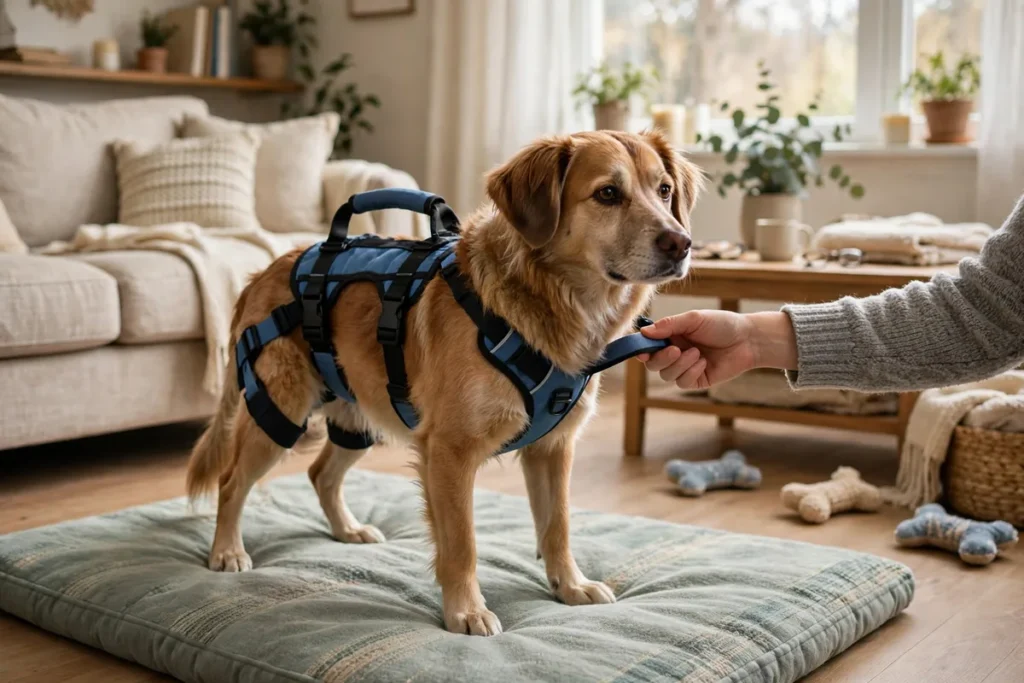
Most sites quote “$1,500 to $4,000” for IVDD surgery. That leaves out the MRI that finds the disc, the hospital nights, and the rehab — the parts that turn a surgery quote into a five-figure course of care. Here is the fuller picture, from a published veterinary cost guide and a specialty hospital’s own price list.
| Part of care | Typical cost | Notes |
|---|---|---|
| MRI scan (to locate the disc) | $1,500–$3,500 | Almost always needed before surgery |
| Surgery (hemilaminectomy) | $2,000–$5,000 | Neck cases use a similar operation called a ventral slot |
| Hospital stay | $200–$600 per night | Usually 2–5 nights after surgery |
| Full surgical course, all-in | $5,000–$12,000 | One San Francisco specialty hospital publishes an all-in package at $10,000–$12,000 and says its local average tops $15,000 |
| Rest-and-medicine course (mild cases) | $500–$2,500 | Exams, pain medicine, rechecks over 4–8 weeks of strict rest |
| Rehab / physical therapy | $60–$200 per session | Often 6–12 sessions after surgery |
A worked example: what insurance actually pays
Say the all-in bill for surgery, MRI and hospital care comes to $8,000, and your plan has a $500 deductible and pays 80% — common settings at most brands. The math: $8,000 minus the $500 deductible is $7,500. The plan pays 80% of that, which is $6,000 back to you. You pay $2,000 in total. Without insurance, you pay all $8,000 — usually on a credit card, at midnight, while your dog is in pain. Our guide to pet insurance deductibles shows how different deductible choices change this math. One wrinkle: Trupanion uses a per-condition deductible, so its math runs once per condition rather than once per year.
The pre-existing trap: why timing is everything
This is the section to read twice, because it is where IVDD claims are won and lost.
After the first episode, the door closes. Once a vet has diagnosed IVDD — or treated your dog for a suspected disc episode — every new insurer files it as pre-existing. AKC’s policy wording is the bluntest we found: IVDD diagnosed, treated, or showing symptoms before coverage starts or during the wait excludes “any further episodes of IVDD or any future occurrence of this condition.” Embrace’s policy says the same in its own words. A new disc, a new year, a new insurer — it does not matter. The diagnosis follows the dog.
The chart note you never noticed can do the same damage. Claims teams read vet records looking for early signs. Notes like “pain on spinal palpation,” “reluctant to jump,” or “suspected disc pain, rest advised” can be enough to date IVDD back before your policy, even if nobody used the word IVDD at the time. You cannot erase honest vet notes, and you should never try. But you can sequence things well: if your puppy’s first check-up is coming, enroll before that visit, while the chart is still blank. Our puppy insurance guide explains why the first month matters so much.
The “curable condition” resets will not save IVDD. Spot and ASPCA let some pre-existing conditions count as new after 180 days symptom-free, and Fetch uses 365 days. These resets are real — for things like ear infections or a stomach upset. A degenerative disc disease is chronic by nature; insurers do not treat it as cured because a dog had six quiet months. Do not buy a policy counting on a reset for IVDD. The one partial exception is AKC, which markets cover for pre-existing conditions after 365 days of continuous coverage — but its own disclosure carves IVDD episodes out, so treat that as “maybe, in some states, if AKC confirms it in writing for your dog,” not as a plan.
So the buying advice for at-risk breeds is plain: enroll in the first month home, pick a brand whose IVDD wait you can live with, keep the policy continuous, and get the orthopedic exam done early if your brand offers a waiver. Every month you wait is a month a silent disc gets to go first.
Best plan features for at-risk breeds: a checklist
- Accident and illness plan — never accident-only — with IVDD named or clearly inside hereditary cover.
- An IVDD wait of 30 days or less if your dog is already an adult; if you pick a 180-day brand, use its exam waiver in the first two weeks.
- A high or unlimited annual limit. A $5,000 limit can be eaten by one surgical course; IVDD is exactly the condition limits were invented to fail.
- Rehab included, not added. Check whether physical therapy sits in the base plan, a top tier, or a paid add-on — and price the add-on before you judge the premium.
- 80–90% reimbursement if you can afford the premium: on a $10,000 bill, the gap between 70% and 90% is $2,000 out of your pocket.
- No per-condition caps or “bilateral” surprises that shrink cover when a second disc goes.
- Coverage that continues at renewal for chronic conditions — IVDD care can span years, so confirm the plan cannot drop the condition at renewal time.
The honest read: Pet insurance that covers IVDD is easy to find — almost every accident and illness plan includes it. Pet insurance that covers it soon is the real shopping task. For a Dachshund, French Bulldog, Corgi or any long-backed puppy, the strongest move is a plan with a 14–30 day IVDD wait (Spot, Pumpkin, ASPCA, Pets Best, Lemonade, Trupanion), bought in the first month home, with rehab included and a limit high enough for a $12,000 year. Fetch, Embrace and AKC cover IVDD too, but their six-month waits leave a long window where one bad jump is fully on you. And if your dog has already had an episode, be honest with yourself: no new policy will pay for the next one, so put the premium money into a savings jar for the surgery instead — and insure the rest of the dog.
Frequently asked questions
Does pet insurance cover IVDD?
Yes. Every major brand we checked covers IVDD in its accident and illness plan, including the MRI, surgery and hospital care, as long as the first signs appear after you enroll and after the waiting period ends. It is never covered on an accident-only plan, and it is never covered if your dog showed signs before the policy started.
What is the best pet insurance for IVDD?
Look at the waiting period first. Spot, Pumpkin, ASPCA and Pets Best cover IVDD after about 14 days; Lemonade and Trupanion after 30 days; Fetch, Embrace and AKC make you wait about 6 months. After the wait, the best plan is the one that also includes rehab, has a high annual limit, and pays 80–90% — that combination is worth more than a slightly cheaper premium.
Is IVDD a pre-existing condition for pet insurance?
It is as soon as it is diagnosed, treated, or even suspected in your dog’s vet records before your policy starts or during the waiting period. Insurers count early signs too — back pain or tenderness noted at a routine visit can be used to date the condition back. Once IVDD is pre-existing, future episodes at other discs are excluded as well at most brands.
How much does IVDD surgery cost?
A full surgical course — MRI, the operation, and hospital nights — usually runs $5,000 to $12,000. The surgery alone is often quoted at $2,000 to $5,000, and the MRI adds $1,500 to $3,500. One San Francisco specialty hospital publishes an all-in package at $10,000 to $12,000 and says the local average is over $15,000. Mild cases handled with rest and medicine cost far less, about $500 to $2,500.
Can a dog recover from IVDD without surgery?
Often, yes — if the case is mild. Dogs at grade 1 or 2 (pain, or wobbly but still walking) are usually treated first with 4 to 8 weeks of strict crate rest and pain medicine, and many recover well. Dogs that cannot walk, keep having episodes, or lose feeling in their back legs usually need surgery, and waiting too long lowers the odds of a full recovery.
How long is the waiting period for IVDD coverage?
It depends entirely on the brand, which is why this question matters. It ranges from 14 days (Spot, Pumpkin, ASPCA, Pets Best) to 30 days (Lemonade, Trupanion) to about 6 months (Fetch, Embrace, AKC). Waiting periods can also vary by state. Check the exact wait on the policy you are issued — anything that shows symptoms during the wait counts as pre-existing.
Do any insurers exclude IVDD for Dachshunds or other breeds?
We could not find a breed exclusion for IVDD in any major brand’s current official pages or sample policies — and Spot and Pumpkin state in writing that they have no breed restrictions. The exclusion that actually catches owners is timing: signs before enrollment or during the waiting period, not the breed itself. If an agent claims a breed exclusion, ask to see it in the policy wording.
My dog already had an IVDD episode. Can I still get it covered?
Realistically, no. Once IVDD is diagnosed or treated, new insurers treat it — and any future episode — as pre-existing. The “curable condition” resets some brands offer do not apply to a degenerative disc disease. AKC markets cover for pre-existing conditions after 365 days of continuous coverage, but its own disclosure carves out IVDD episodes, so get AKC’s answer in writing for your state before counting on it. A policy can still be worth buying for everything else — just not for the back.
How we wrote this guide: every brand rule above was checked against the insurer’s own website, help center, state disclosures or sample policy documents in October 2026 — not copied from roundup sites. Costs come from a published veterinary cost guide and a specialty hospital’s own price list; breed risk figures come from a 2025 JAVMA study of 43,517 US dogs, UC Davis, and the Cambridge IVDD Research Group. Where a brand’s own documents disagreed (it happened), we said so in the text. Plan terms vary by state and change over time, so confirm your exact policy wording before you rely on any single detail. Last updated: October 2026.
Sources
- Fetch Pet Insurance — Pet Insurance That Covers IVDD
- Fetch Pet Insurance — Waiting Period FAQ (6-month orthopedic wait incl. disc degeneration)
- Embrace — The Orthopedic Condition Waiting Period (IVDD, 180 days, exam reduction)
- Embrace — Coverage (IVDD under breed-specific & genetic conditions)
- Pets Best — Coverage for Hereditary & Congenital Conditions (IVDD)
- Spot Pet Insurance — IVDD in Dogs: Symptoms, Treatment, and What It Costs
- Spot Pet Insurance — California Policy Disclosure (waiting periods; 180-day curable reset)
- Trupanion — When Does My Coverage Start? (5-day injury / 30-day illness; no condition-specific waits)
- Lemonade — IVDD in Dogs (covered in base accident & illness plan; physical therapy add-on)
- AKC Pet Insurance / PetPartners — CompanionPlus Sample Policy (180-day IVDD waiting period)
- PetPartners — Insurer Disclosure (IVDD future-episode exclusion; 365-day pre-existing rule)
- Pumpkin — What Does Pet Insurance Cover? (IVDD named)
- Pumpkin — Pumpkin vs. AKC (14-day wait incl. IVDD; no 180-day orthopedic wait)
- Healthy Paws — Dog Insurance (no restrictions on hereditary conditions)
- Healthy Paws — Dachshund Beats Intervertebral Disc Disease (published claim story)
- UC Davis Veterinary Genetics Laboratory — Chondrodystrophy (CDDY) and IVDD
- Texas A&M College of Veterinary Medicine — Intervertebral Disc Disease in Dogs (Type I vs II; medical vs surgical care)
- Today’s Veterinary Practice — Intervertebral Disk Disease in Dogs (grades; surgery success rates)
- VetReceipt — Dog Spinal Surgery / IVDD Cost (MRI, surgery, conservative care breakdown)
- Remedy Veterinary Specialists — IVDD Surgery (all-inclusive package $10,000–$12,000)