
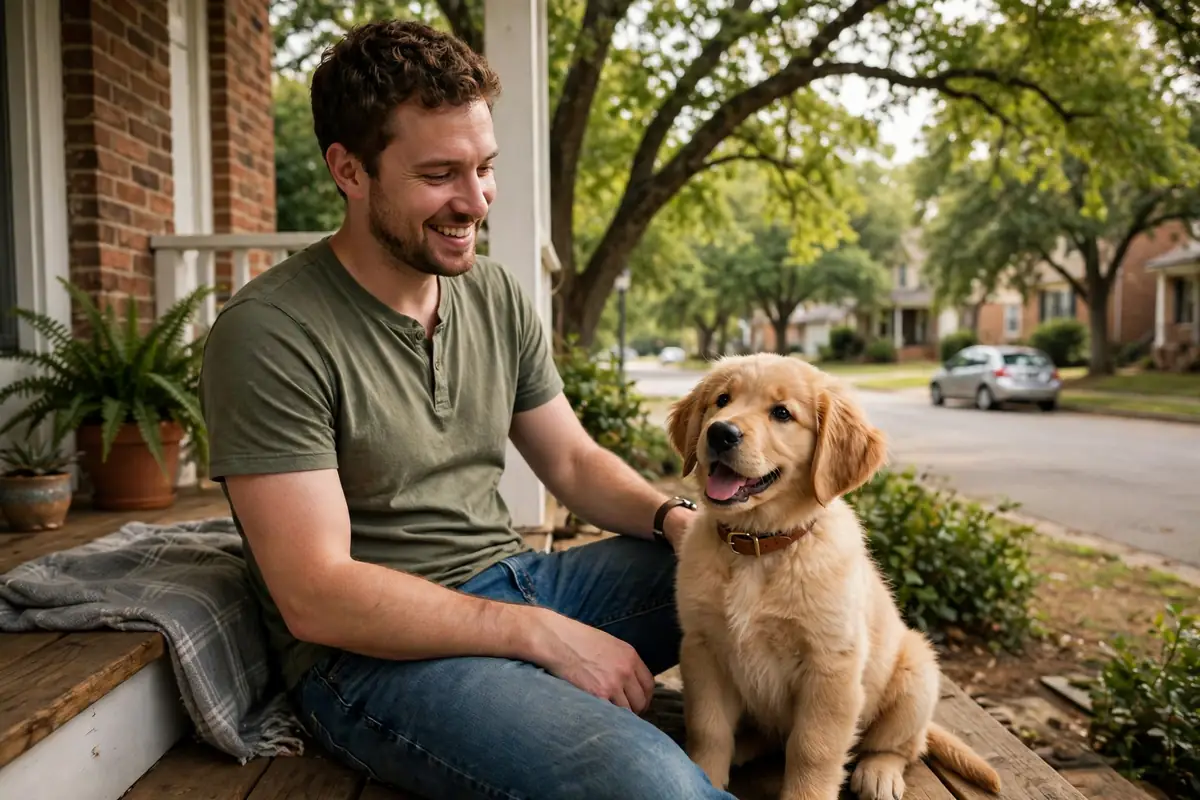
Arkansas Pet Insurance: The Cheap Price Trap
Arkansas pet insurance looks like a bargain. A dog plan here runs about $34 to $45 a month, and a cat plan about $20 to $25 a month. So why does this guide open with a warning? Because the cheapest quote is often not the cheapest policy. A $19 a month plan can cost more over a year than a $20 plan. A puppy quote can triple by the time the dog turns ten. And Arkansas has no pet insurance law of its own, so the fine print is the only protection you get.
The short version: Arkansas pet insurance costs about $34 to $45 a month for a dog and $20 to $25 a month for a cat. Figo is cheapest in MarketWatch’s Arkansas sample at $19 a month overall, but it does not cover vet exam fees in its base plan. A puppy costs about $41 a month on Pawlicy’s Arkansas averages, and the same dog costs about $126 a month at age ten. Arkansas has not adopted the NAIC pet insurance law.
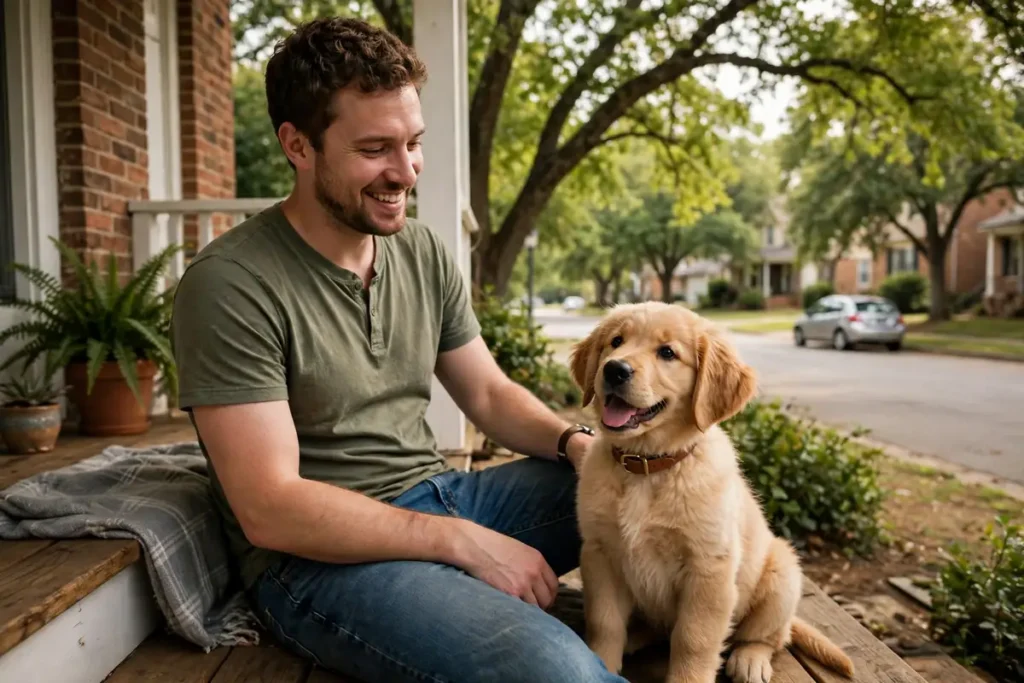
Arkansas looks cheap. Here is where the money leaks out.
The cheap part is true. Every published source puts Arkansas below the national average. Insurify, working from more than 250,000 quotes, puts Arkansas at $34 a month for dogs and $20 for cats, against national medians of $43 and $23. MarketWatch, using ten sample pets across 22 providers, puts the Arkansas average at $45 and $24. NerdWallet, on a $5,000 cover, 80 percent reimbursement, $250 to $500 deductible profile, puts it at $47 and $25.
All of them are right, for the thing each one measured. A median quote is not the same as a sampled average.
Here is the honest line. Arkansas pet insurance runs roughly 20 to 35 percent below the national average on published figures, depending on how you measure it. PetCostHub says 35 percent below, from its own 0.65 factor. A rough index built from NAPHIA’s 2026 figures points the same way, about 33 percent below, but it measures average premium per insured pet, not the price of an identical policy.
Three leaks drain the bargain: the headline price leaves out things you will pay for anyway, like vet exam fees; the puppy price is not the senior price; and Arkansas law does not catch you if the policy wording is harsh.
The $19 policy that costs more
Figo is the cheapest name in MarketWatch’s Arkansas table. It averages $19 a month overall, $24 for dogs and $13 for cats, on ten sample pets aged three months to eight years. Embrace sits next at $20 overall.
Figo does not cover vet exam fees in its base plan. The exam fee rider costs $6 a month for dogs, so the $19 headline becomes $25 a month once you add it. Embrace, at $20 a month overall, includes more in its base cover. A reader who picks Figo on the $19 headline and then pays exam fees out of pocket at every visit can end up paying more over the year than the Embrace buyer.
That is the trap in one paragraph. Compare the whole policy, not the headline. Does the base plan pay exam fees? What is the deductible, per year or per condition? What is the annual limit? Most Arkansas buyers land at 80 percent reimbursement, the rate behind the Pawlicy figures here and the worked claim example later on.
The senior dog shock
The puppy price is not the dog price. It is the starting price.
Pawlicy’s Arkansas averages, all on the same recipe of 80 percent reimbursement, unlimited annual limit, and a $500 deductible, tell the story in three numbers. A puppy costs $40.56 a month. A five year old dog costs $52.83. A ten year old dog costs $126.05, more than three times the puppy. Cats climb the same hill, lower down: a kitten costs $26.63 a month, a five year old cat $30.62, and a ten year old cat $71.05.

If you wait until your dog is old and sick to buy cover, you pay the senior price, and you may not get cover for the condition that made you buy it. Buying young is the only way to lock in the low price while your pet is still healthy.
Breed moves the price too. PetCostHub’s modeled breed table, an estimate rather than a quote, puts a Beagle adult at about $27 a month and a Bulldog adult at about $60. A Rottweiler adult sits near $55, a French Bulldog near $45, a Labrador near $32, and a Golden Retriever near $34. At senior age a Bulldog runs about $114 a month and a Rottweiler about $106.
| Breed (modeled estimates) | Puppy | Adult | Senior |
|---|---|---|---|
| Beagle | $23 | $27 | $51 |
| Chihuahua (adult) | Not listed | About $22 | Not listed |
| Labrador Retriever | $28 | $32 | $62 |
| Golden Retriever | $29 | $34 | $65 |
| Dachshund | $29 | $34 | $63 |
| German Shorthaired Pointer | $30 | $35 | $67 |
| German Shepherd | $31 | $36 | $69 |
| Poodle | $32 | $38 | $70 |
| French Bulldog | $38 | $45 | $86 |
| Rottweiler | $46 | $55 | $106 |
| Bulldog | $51 | $60 | $114 |
Source: PetCostHub Arkansas breed table, modeled estimates, not quotes. The cheapest adult dog is the Chihuahua at about $22 a month, and the cheapest cat is the Domestic Shorthair at about $17.
The real Arkansas prices, insurer by insurer
MarketWatch’s Arkansas table, with data updated in November 2026, quotes 22 providers on the same profile: ten sample pets, five dogs and five cats, aged three months to eight years, mixed and purebred. The table below shows the 15 providers with full figures. The state average on that profile is $45 a month for dogs and $24 for cats.
| Insurer | Dogs | Cats | Overall |
|---|---|---|---|
| Figo | $24 | $13 | $19 |
| Embrace | $25 | $15 | $20 |
| AKC | $28 | $17 | $23 |
| Pets Best | $29 | $21 | $25 |
| MetLife | $37 | $20 | $29 |
| Fetch | $34 | $24 | $30 |
| Paw Protect | $44 | $20 | $32 |
| VCA CareClub | $54 | $25 | $32 |
| Hartville | $46 | $26 | $36 |
| Lemonade | $49 | $23 | $36 |
| Petco | $48 | $23 | $36 |
| ASPCA | $51 | $28 | $39 |
| Liberty Mutual | $52 | $27 | $41 |
| Spot | $59 | $30 | $45 |
| Pumpkin | $107 | $49 | $78 |
Source: MarketWatch Arkansas insurer table, data updated November 2026. Use the table figures, not the insurer cards on the same page: the Lemonade card says $46 for dogs, while the table says $49, and the ASPCA card says $46, while the table says $51.
Read the table in three bands. Cheap: Figo at $19, Embrace at $20, AKC at $23, and Pets Best at $25. Middle: MetLife at $29 through Lemonade and Petco at $36. Dear: Spot at $45 and Pumpkin at $78. Healthy Paws averages $25 overall and Trupanion $51, on MarketWatch’s per insurer averages.
Fetch’s own Arkansas page puts its average at $28 a month for dogs and $21 for cats, close to its $30 overall figure in the table. Embrace publishes ballparks by breed and age: a mixed breed aged one runs $30 to $45 a month, a Golden Retriever aged three $30 to $50, and a Labrador aged five $60 to $100.
Unlimited cover costs more. Embrace unlimited runs $28 for dogs and $19 for cats, Figo $38 and $22, Healthy Paws $36 and $15, Pets Best $32 and $23, Spot $119 and $58, and Pumpkin $107 and $53.
City makes a smaller difference than age or breed. Pawlicy, on its 80 percent reimbursement, unlimited limit, $500 deductible recipe, quotes a six month old Golden Retriever puppy at $28 to $77 a month in Fort Smith and $28 to $84 in Little Rock. No published marketplace ranges exist for Fayetteville, Jonesboro, or Springdale, so this guide does not invent any.
| Pet, on Pawlicy’s recipe | Fort Smith | Little Rock |
|---|---|---|
| Chihuahua puppy, 6 months | $16 to $48 | $16 to $52 |
| Golden Retriever puppy, 6 months | $28 to $77 | $28 to $84 |
| Domestic Shorthair kitten, 6 months | $13 to $32 | $13 to $35 |
| Chihuahua, 5 years | $21 to $58 | $21 to $63 |
| Golden Retriever, 5 years | $38 to $94 | $38 to $102 |
| Domestic Shorthair cat, 5 years | $15 to $38 | $15 to $41 |
| Maine Coon cat, 5 years | $18 to $41 | $18 to $46 |
Source: Pawlicy Arkansas city ranges. The same puppy can cost nearly three times as much from the dearest quote as from the cheapest.
Why Arkansas is cheap, and why that is not the whole story
Part of the answer is vet costs. Pawlicy’s vet cost index puts veterinary care and pet insurance for dogs about 5.42 percent lower in Arkansas than the national average, and for cats about 7.14 percent lower. Five to seven percent does not explain a 20 to 35 percent premium gap.
The rest comes from the market itself. Only 0.3 percent of insured pets in the United States live in Arkansas, according to NAPHIA’s 2026 state distribution. Fewer insured pets means a smaller, less claimed on pool. Most Arkansas buyers are first time buyers.
Nationally, the market is growing fast. NAPHIA’s 2026 report counts 7.6 million insured pets in North America at the end of 2025, with United States penetration at 4.27 percent. Gross written premium hit $6.2 billion, up 19.4 percent. The national average for accident and illness cover was $836 a year for dogs, about $70 a month, up 11.5 percent from $749 in 2024, and $435 a year for cats, about $36 a month, up 12.6 percent from $386.
Cheap premiums do not mean cheap vet bills. Arkansas is one of the five states with the highest heartworm incidence in the American Heartworm Society’s 2025 incidence survey, released in April to May 2026, alongside Texas, Louisiana, Mississippi, and South Carolina. Ask any insurer whether heartworm treatment is covered, and whether the policy requires year round prevention to keep that cover.
Accident only cover is the budget option. Insurify’s national medians put accident only at $16.10 a month for dogs and $9.17 for cats, against $43 and $23 for full accident and illness cover. What you give up is everything that is not an accident. Accident only suits a tight budget and a young, healthy pet.
The law gap no Arkansas page warns you about
Arkansas has not adopted the NAIC pet insurance law. The NAIC Summer 2026 tracker lists Arkansas as having no current activity on Model Act 633, while seventeen states have adopted the model.
Three things buyers in other states take for granted do not exist in Arkansas law. First, there is no state mandated free look period. In model act states you get a set number of days to read the policy and cancel for a full refund. In Arkansas, the insurer sets its own terms, if it offers one at all.
Second, there is no state cap on waiting periods. The six month orthopedic wait in the next section is the concrete example.
Third, there is no state rule forcing the insurer to prove a condition was pre-existing. The policy’s own definition decides.
Arkansas pet insurance is not required by law. Rabies vaccination is a different matter: dogs and cats in Arkansas must be vaccinated against rabies by a licensed veterinarian every one to three years, according to the Arkansas Department of Health as cited by MarketWatch. Routine vaccines are a wellness add on, not base cover.
If an insurer treats you unfairly, complain to the Arkansas Insurance Department: its online complaint form, its Consumer Services Division at 1 Commerce Way, Suite 102, Little Rock, AR 72202-2087, or its helpline at 1-800-852-5494. Keep every document.
Before you sign, read four things. The waiting periods, including the orthopedic wait. The pre-existing definition, including the bilateral exclusion, which can bar both knees for life if one knee goes bad. The deductible, per condition or per year. And the annual limit. If any of those four is unclear, ask the insurer in writing and keep the answer.
Waiting periods: the second trap
A waiting period is the gap between the day you buy the policy and the day cover starts. Anything that happens inside the gap is not covered. In a state with no cap on waiting periods, the gap is whatever the insurer wrote.
| Insurer | Accidents | Illness | Orthopedic (knee and hip) |
|---|---|---|---|
| Fetch | No wait | 15 days | 6 months, waivable with a vet exam within 180 days |
| Lemonade | No wait | 14 days | 30 days |
| Many insurers (MarketWatch range) | As short as 1 to 2 days at some insurers | 14 to 30 days | 6 to 12 months, sometimes waivable with a vet exam |
Source: Fetch’s own Arkansas page and the Money.com Fetch review for Fetch; MarketWatch Arkansas page for the general range. Fetch’s own page says no waiting period for accidents, though one comparison table elsewhere says 15 days. Trust Fetch’s own page on this point.
The orthopedic wait is where Arkansas buyers get caught. Six months is common for knee and hip problems, and some insurers stretch it to twelve months. A dog that tears a cruciate ligament in month three is not covered for it. Some insurers waive the wait if a vet examines the pet within a set window, 180 days for Fetch’s knee waiver.
No Arkansas insurer has to cover a condition your pet already had. A few, like Fetch and Embrace, cover curable pre-existing conditions after a symptom free period, usually twelve months. A chronic condition like diabetes or arthritis will stay excluded.
Do not wait for a symptom to buy. If your dog starts limping on a Tuesday and you buy a policy on Wednesday, the limp is pre-existing.
What a Little Rock vet visit really costs
Here are the Arkansas vet bills, with the source on each one.

A vet exam in Arkansas runs about $69 on the published practice median, against $75 nationally, from eight Arkansas practices in PetPriceBook’s October 2026 data. In Little Rock, Pawlicy puts a routine checkup at about $82, a spay or neuter at about $169, vaccines at about $17 per shot, a physical exam at about $46, and allergy testing at about $211.
| Service in Little Rock | Arkansas figure | National range |
|---|---|---|
| Routine checkup | About $82 | $50 to $250 |
| Spay or neuter | About $169 | $160 to $220 |
| Vaccines, per shot | About $17 | $15 to $28 |
| Physical exam | About $46 | $45 to $55 |
| Allergy testing | About $211 | $195 to $300 |
| Vet exam, Arkansas median | About $69 | $75 median |
Source: Pawlicy Little Rock vet costs; PetPriceBook for the $69 exam median. A typical total emergency bill in Little Rock runs about $722, on PetPriceBook’s estimate, with an emergency exam fee of about $112. Both are BEA adjusted estimates, not measured local medians. Little Rock’s regional price parity is 89.4, about 10.6 percent below the national average.
Now the worked example. Take a $3,000 emergency bill in Arkansas. Your policy has a $500 deductible, 80 percent reimbursement, and a $5,000 annual limit. You pay the first $500. The insurer pays 80 percent of the remaining $2,500, which is $2,000. You pay the other $500. Your total out of pocket on that bill is $1,000, plus premiums already paid. This is an illustration, not a promise about any real policy.
A year of cover for an adult dog costs about $400 to $540 in Arkansas, at $34 to $45 a month. One emergency bill like the one above leaves you $1,000 out of pocket even with insurance, and $3,000 without it.
Who should buy, and who should skip it
Buy it if your pet is young and healthy. That is the clearest case in this guide. A puppy at about $41 a month on Pawlicy’s Arkansas averages is cheap cover for the years when accidents are common and illness is still rare.
Buy it if your savings are thin. If a $1,000 or $3,000 vet bill would go on a credit card or force a hard choice, a fixed monthly cost is worth more to you than it is to someone with a large emergency fund.
Buy it if your breed is high risk. Bulldogs, Rottweilers, French Bulldogs, and German Shepherds all sit at the dear end of the modeled breed table.
Skip it, or think hard, if your pet is already a senior with diagnosed conditions. A ten year old dog at about $126 a month costs about $1,513 a year on Pawlicy’s figures, and the conditions that made you consider insurance are likely excluded as pre-existing. Put that $1,513 a year in a savings account instead.
Skip accident only cover as a permanent plan for an older pet. It is a budget bridge for a young pet, not a substitute for illness cover. And skip any policy you have not read. In Arkansas, the wording is the protection.
How to buy it right in Arkansas
Five steps, in order. They take an afternoon.
Step 1: get three quotes on the same profile. Same pet, same age, same breed, same deductible, same reimbursement rate, same annual limit. If the profiles differ, the prices cannot be compared.
Step 2: compare the deductible and the limit, not just the price. A $500 deductible with a $5,000 limit is a different product from a $250 deductible with unlimited cover. Run the $3,000 claim math from the section above on each quote.
Step 3: check the orthopedic wait. Six months is common for knee and hip problems, and some insurers stretch it to twelve. If you own a large breed, ask whether a vet exam waives it.
Step 4: check the pre-existing wording. Read the definition, the curable condition rule, and the bilateral exclusion. If your pet has any history, ask the insurer in writing whether it counts.
Step 5: buy before a condition is diagnosed. This is the step that saves the most money over a pet’s life, and it costs nothing. Once a condition is on the record, it stays excluded.
Then, once a year, repeat step one. Premiums rise with age, and Arkansas has no law stopping an insurer from raising your price at renewal. Compare it the same way, and switch if the math says so. Do not let cover lapse between policies, or the waiting periods start again.
FAQs
How much is pet insurance in Arkansas?
About $34 to $45 a month for a dog and about $20 to $25 a month for a cat, depending on the insurer and the profile. The cheapest quotes sit near $19 a month, and senior dogs can cost over $100.
Is pet insurance cheaper in Arkansas?
Yes. Arkansas is one of the cheapest states in the country. Most published figures put it roughly 20 to 35 percent below the national average, though the exact gap depends on how you measure it.
What is the cheapest pet insurance in Arkansas?
Figo had the lowest average in MarketWatch’s Arkansas sample at $19 a month overall, $24 for dogs and $13 for cats. Embrace was next at $20. Cheapest is not always best, so check the deductible and the annual limit before you pick on price alone.
Does Arkansas have a pet insurance law?
No. Arkansas has not adopted the NAIC pet insurance law. That means there is no state free look period and no state cap on waiting periods, so the policy wording decides.
How long is the waiting period for pet insurance in Arkansas?
It depends on the insurer. Fetch has no wait for accidents and 15 days for illness. Lemonade has no wait for accidents, 14 days for illness, and 30 days for orthopedic conditions. Some insurers wait 6 months for knee and hip problems.
Does pet insurance cover pre-existing conditions in Arkansas?
No, not in general. No Arkansas insurer has to cover a condition your pet already had. A few, like Fetch and Embrace, cover curable pre-existing conditions after a symptom-free period, usually 12 months.
Is pet insurance worth it in Arkansas?
It depends on your savings. A year of cover for an adult dog costs about $400 to $540 in Arkansas, while one emergency surgery can run into the thousands. If a surprise bill that size would hurt, insurance turns it into a fixed monthly cost.
How much does a vet visit cost in Arkansas?
A vet exam in Arkansas runs about $69 on the published practice median, against $75 nationally. In Little Rock, a routine checkup averages about $82 and a spay or neuter about $169.
Sources
- NAPHIA 2026 State of the Industry Report: naphia.org
- Insurify, average pet insurance cost, June 2026: insurify.com
- MarketWatch, best pet insurance in Arkansas, Nov 2026 data: marketwatch.jppqa.com
- Fetch Pet Insurance, pet insurance in Arkansas: fetchpet.com
- Money.com, Fetch pet insurance review: money.com
- Embrace Pet Insurance, pet insurance in Arkansas: embracepetinsurance.com
- Pawlicy Advisor, best pet insurance in Arkansas: pawlicy.com
- Pawlicy, vets in Little Rock: pawlicy.com
- NerdWallet, how much is pet insurance, updated July 10, 2026: nerdwallet.com
- PetCostHub, pet insurance cost in Arkansas: petcosthub.com
- NAIC Summer 2026 Model Act 633 tracker: naic.org
- Arkansas Insurance Department, file a complaint: insurance.arkansas.gov
- American Heartworm Society 2025 survey, via EINPresswire: einnews.com
- dvm360, heartworm incidence map: dvm360.com
- PetPriceBook, vet costs in Little Rock: petpricebook.com
- PetPriceBook, Little Rock vs Memphis vet costs: petpricebook.com